

LIGHT UP YOUR LIMITS
09 Oct, 2026
Nearly Two Decades of Choice: A Reliable Light for Every Outdoor Mission

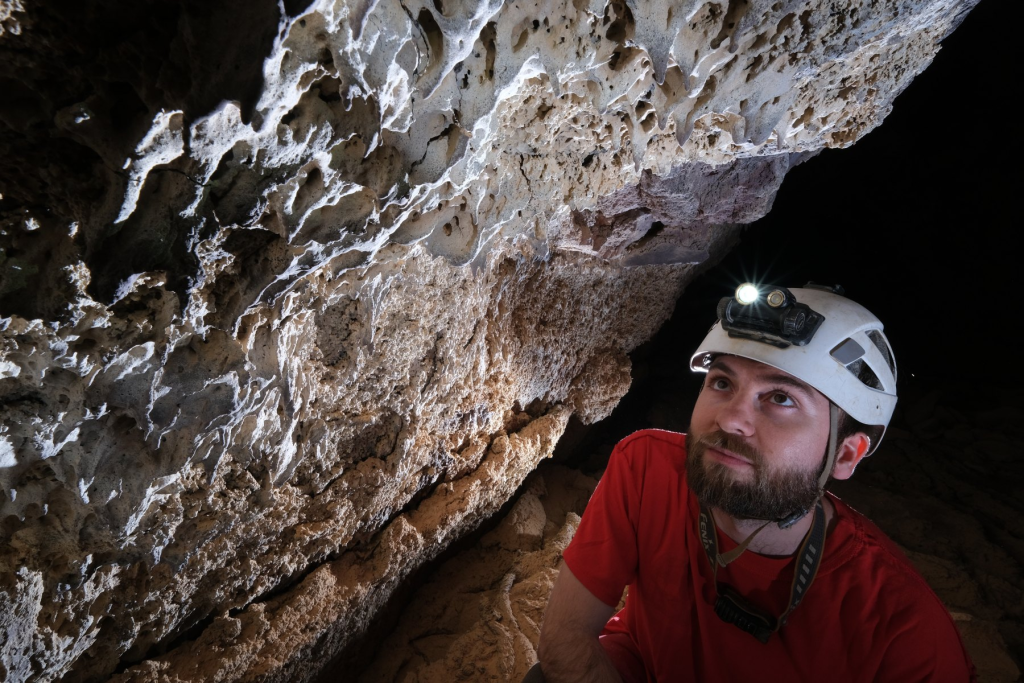
For more than twenty years, Boaz Langford has been drawn underground again and again. For a caver, there is no sunlight and no familiar reference point below ground. Once you enter the darkness, the light you carry not only determines what you can see, but also affects every step you take.
About a decade ago, he began using Fenix headlamps. Since then, Fenix has accompanied him on his explorations. This time, his journey took him to the volcanic region of Harrat Khaybar in central Saudi Arabia. Vast black lava fields stretch across the desert, interrupted by volcanic cones, pale volcanic mountains, and occasional openings leading underground. The contrast between the open landscape above and the darkness below is part of what continues to draw him into the unknown.
A Chance Encounter
Caves have drawn me underground for more than twenty years. In a place where no natural light exists, lighting is not simply another item of equipment. It determines what you can see, how safely you can move, and whether you can properly document the cave.
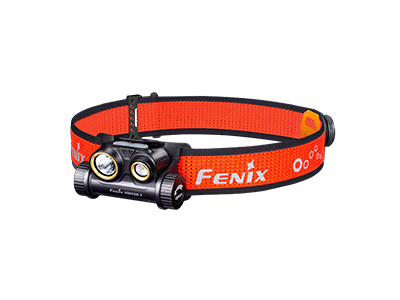
About a decade ago, I began using Fenix headlamps. Since then, they have been both my primary and backup lights. Today, the headlamp I use most often is the Fenix HM70R.
My latest journey took me into the basalt deserts of Saudi Arabia.
In central Saudi Arabia, north of Medina, I joined local cavers and a European colleague to look for caves in the volcanic region of Harrat Khaybar. Our guide was Hassan Al-Rashidi, an experienced Saudi caver, accompanied by several local friends.
We were not only interested in visiting caves that had already been discovered and documented. We also wanted to listen to the people who knew the landscape and follow clues that would never appear on any cave map.
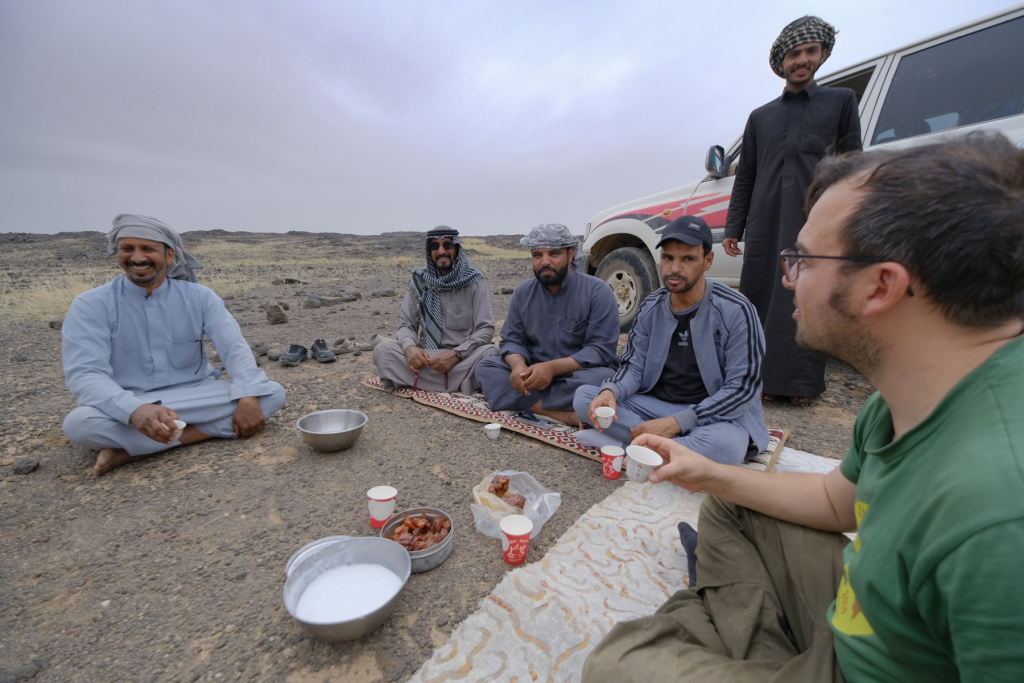
During the trip, we met two camel herders. We sat beside their vehicles, sharing camel milk and dates while learning about the surrounding land.
They told us of a cave with several openings near the summit of a volcanic cone. They had entered its outer section, but beyond it was a narrow, dark passage they had never explored.
That was enough to make us want to go farther.
Following the Clue into the Unknown
We drove across the rough basalt and climbed toward the summit.
The opening was exactly where they had described it. Inside, the broad entrance area soon narrowed into a low passage.
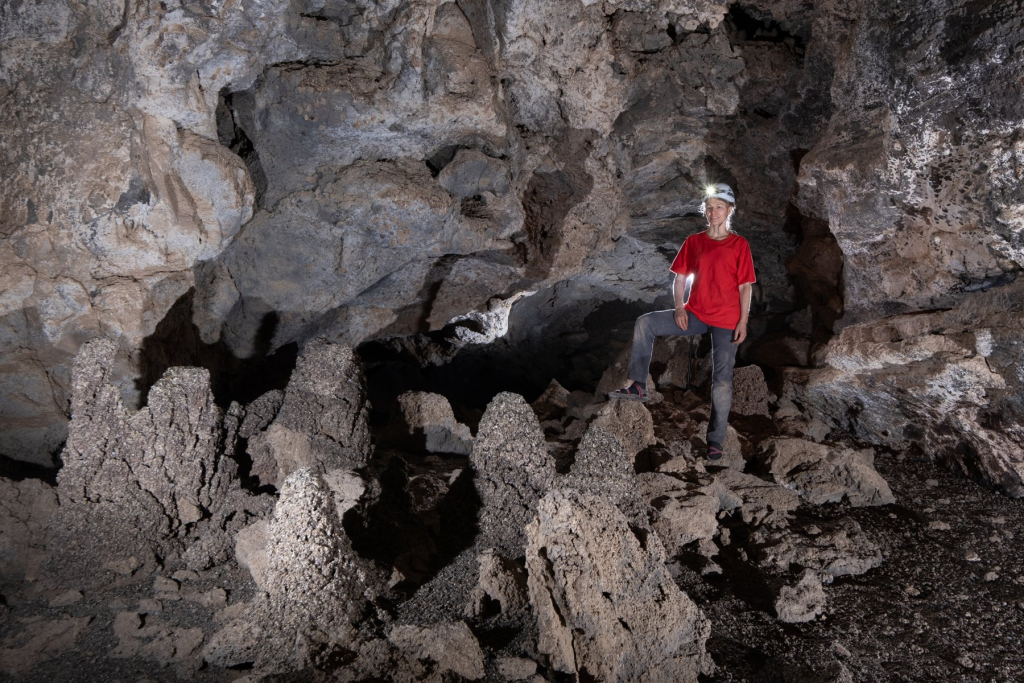
Crawling forward meant leaving behind the part known to the herders and entering a truly unknown section. We did not know where the passage would lead or what we might find inside. Dust filled the air, and the black basalt absorbed much of the light.
In this kind of environment, dependable illumination matters more than impressive specifications on paper. My HM70R gave me a compact and steady light, with enough range to examine the passage ahead and enough output variation for close crawling, route finding, and photography.
We continued forward, little by little.
Beyond the Darkness, Another Space
Several tens of metres beyond the previously known limit, the narrow passage suddenly opened up.
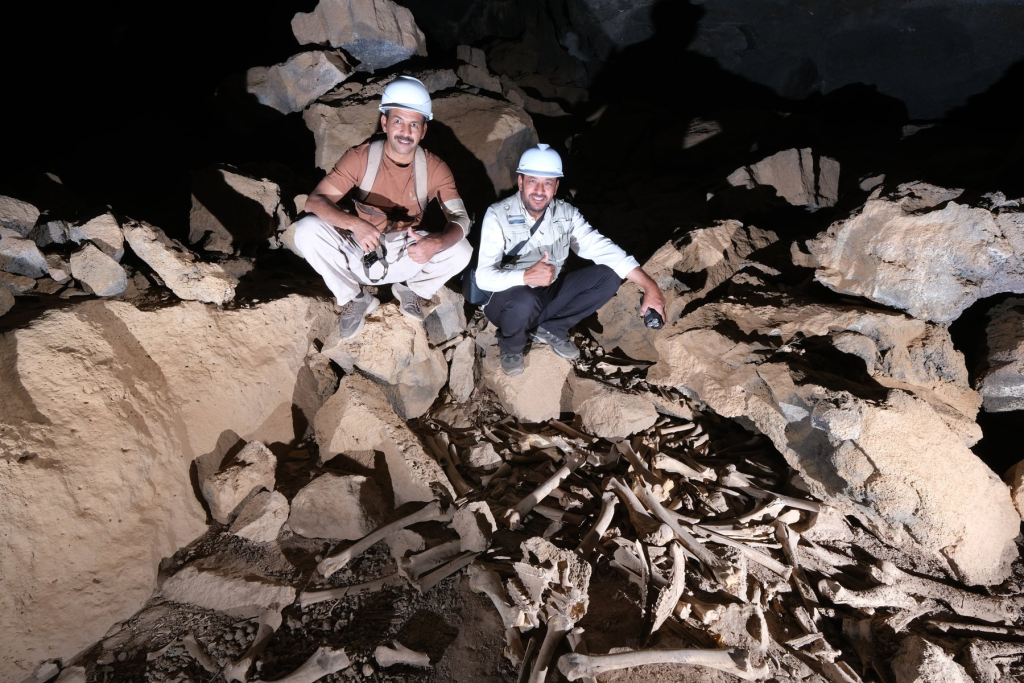
We entered a chamber. There, we found the skeleton of an animal believed to be a caracal, together with a large colony of insect-eating bats.
We did not touch or remove anything. We simply observed, photographed, and left the cave as we found it. In complete darkness, the strong, continuous light from our Fenix headlamps helped us observe the surroundings, compose photographs, and focus, while also revealing the larger space and the finer details of the volcanic landscape.
A Conversation That Led into the Unknown
For us, this experience was never about 'conquering' anything. What truly stuck with me was how it all began.
It was local knowledge, trust, and simple curiosity that led us into a place that had remained unexplored.
A conversation over dates and camel milk became a drive across a lava field, a crawl into darkness, and the first careful documentation of another part of Saudi Arabia’s underground landscape.
Underground, light does more than show the way.
It turns the unknown into something that can be seen, understood, and shared.
Nearly Two Decades of Choice: A Reliable Light for Every Outdoor Mission
Light Lights the Long Trail, Sincerity Awaits Every Rider: A Cross-Border After-Sales Service Earns My Lifelong Trust in Fenix
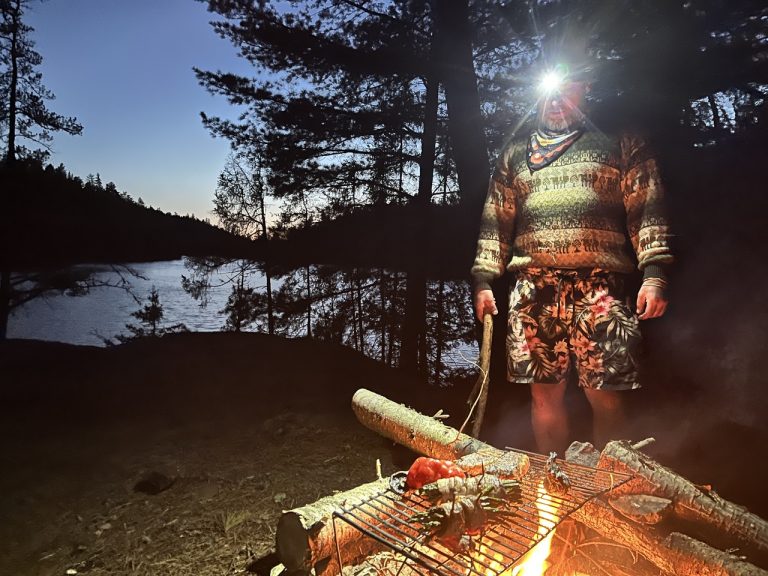
636 Nautical Miles Away: A Fenix Journey Offshore
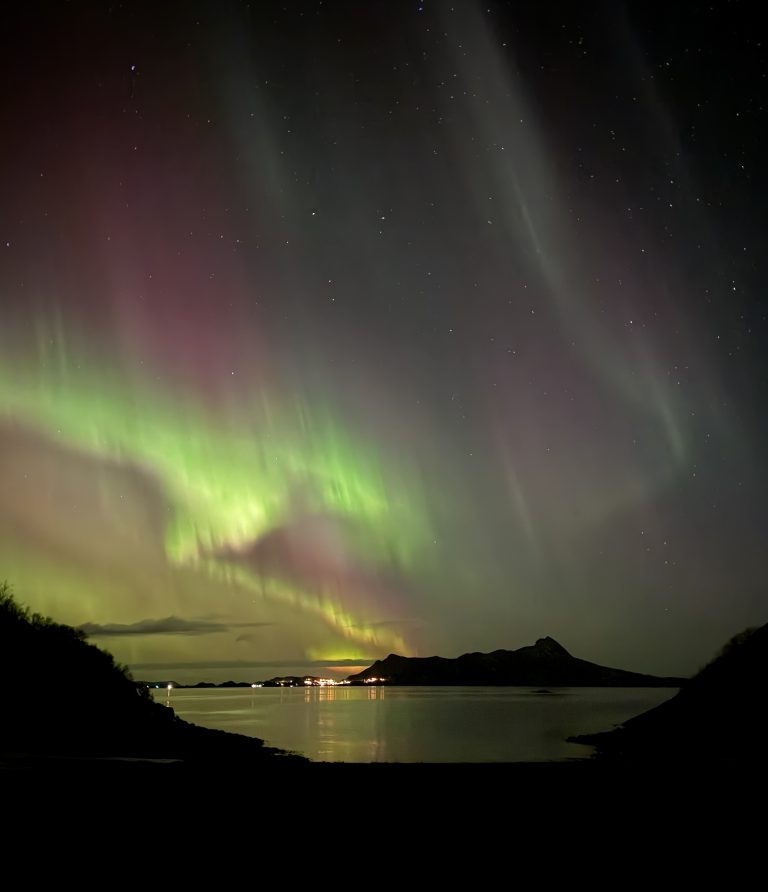
Circling Day and Night, Encounter the Northern Lights
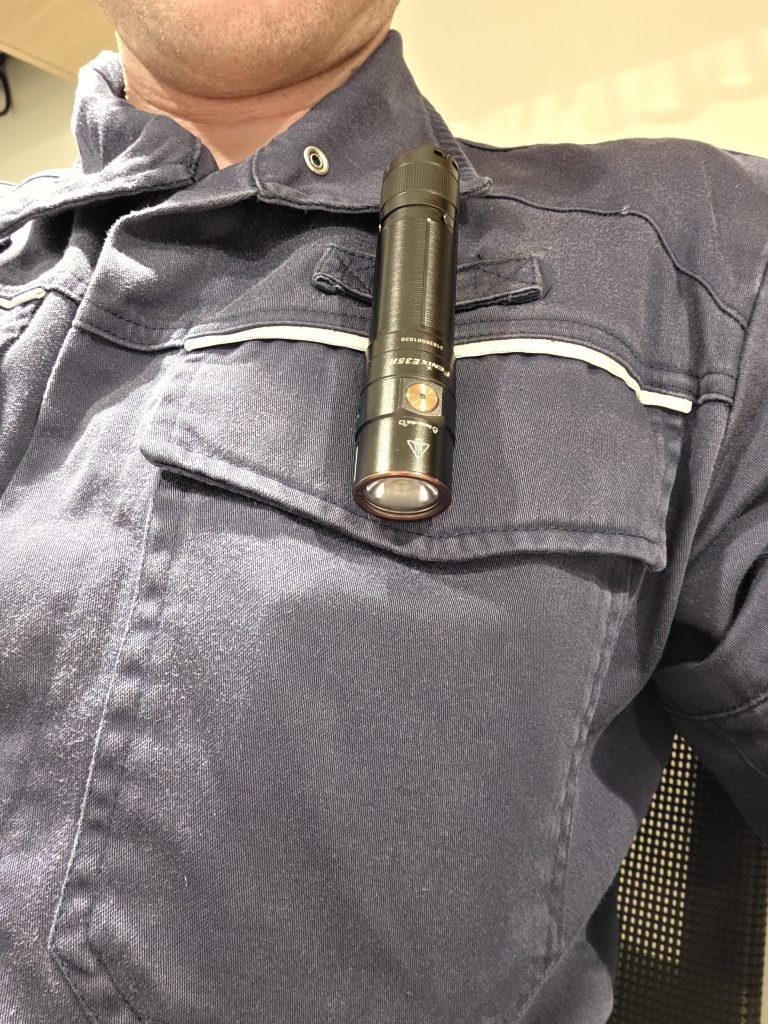
The Spotlight of the Engine Room: How One Fenix Conquered an Ocean Liner

Venture Deep Below, Uncover Secret Underground Landscapes