



Lighting Knowledge / 27 Apr, 2026

Choose a flashlight for atmospheric night photography

Choose a flashlight for atmospheric night photography Feature Image

Source: https://fenix.ua/ua/blog/vybrat-fonar-dlya-atmosfernykh-nochnykh-semok--fenixua/

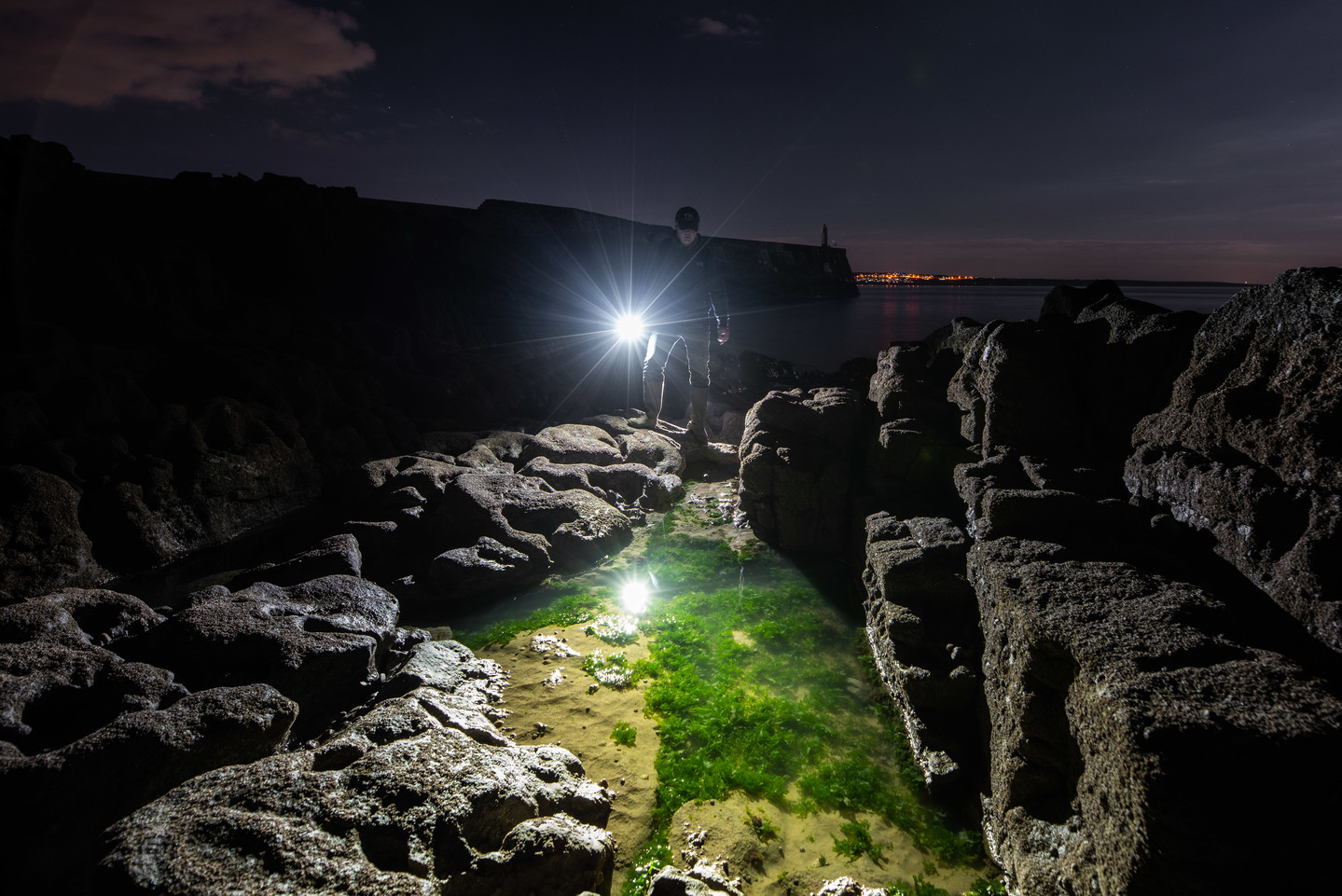
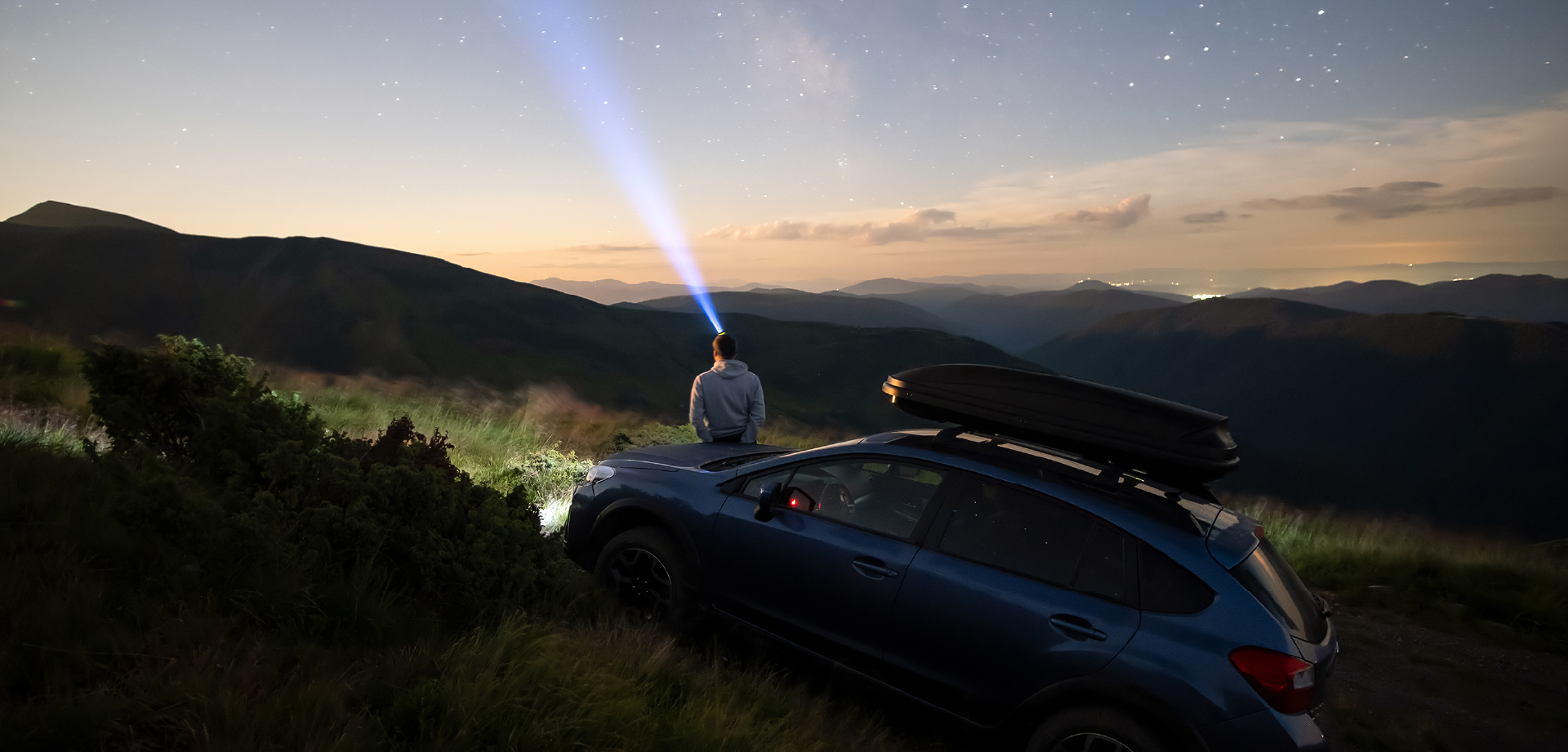
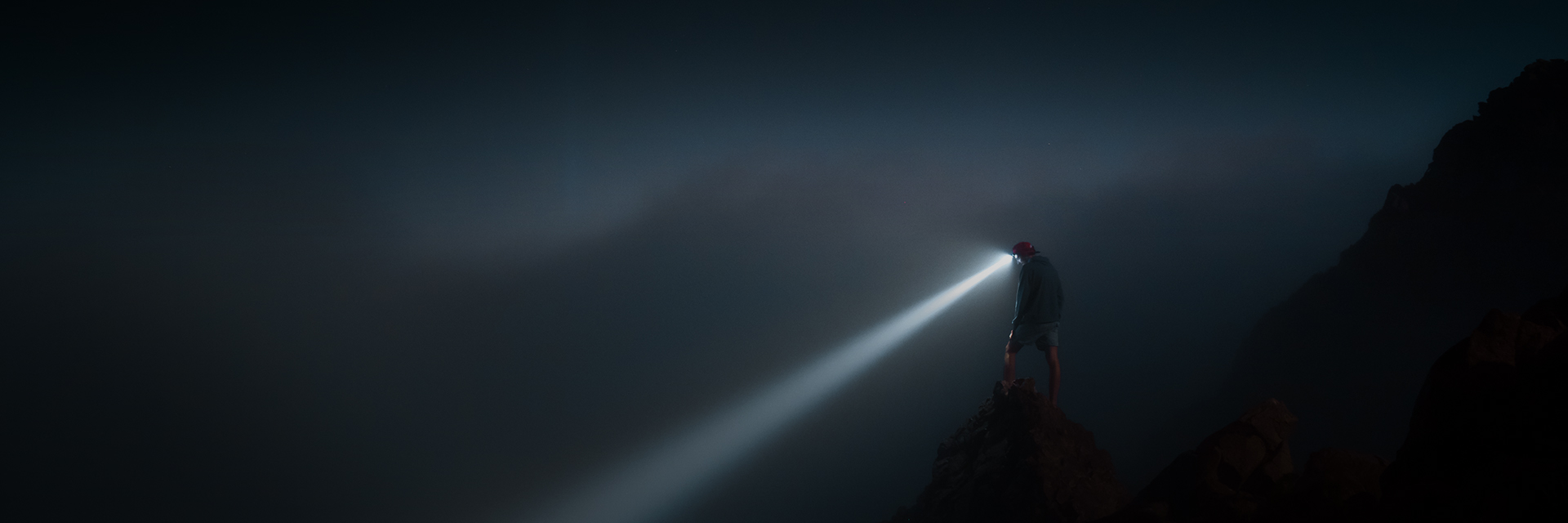
Night photography is a game of light, where every ray becomes a highlight and shadows serve as pauses between words. The lens captures not just a frame, but a mood, and when you have the right light at your disposal, you stop merely illuminating and start truly directing.

Not all lights are equally useful for shooting. It matters how the light converges into a spot, how softly it falls at the edges, whether it casts a green tint, and other nuances. A Fenix lighting for cameras and camcorders is a full-fledged tool that you need to know how to choose to create high-quality content.

Below, we’ll cover the essentials: what color temperature, CRI, and beam pattern you need; which attachments and diffusers will come in handy on location; and why battery life is just as important as the light’s specifications.

Table of Contents

  1. How to Choose a Light for Atmospheric Night Photography
    • 1.1. The Role of Lighting in Photography and Videography
    • 1.2. How to Choose a Light for Photographers and Videographers: What to Consider

How to Choose a Light for Atmospheric Night Photography

At first, LED lights were viewed solely as “utility lighting.” They weren’t used in shots because their beam degraded the image quality. Early LEDs emitted a cool blue light with a low CRI, which severely distorted natural colors. The image was also marred by the flickering of PWM drivers, which left streaks across the frame.

The situation was turned around by the advent of diodes with a high color rendering index (90+), neutral light temperatures of 4000–5000K with a pleasant tone, and constant-current drivers with no visible flickering. Optics moved away from pronounced hotspots toward TIR lenses and smooth reflectors that produce a clean light spot.

At the same time, other features have improved: the ability to run on rechargeable batteries, built-in thermal protection, and removable accessories. For content creators, this has opened up new possibilities: using the flashlight as a practical light source that makes the shot look richer without distortion.
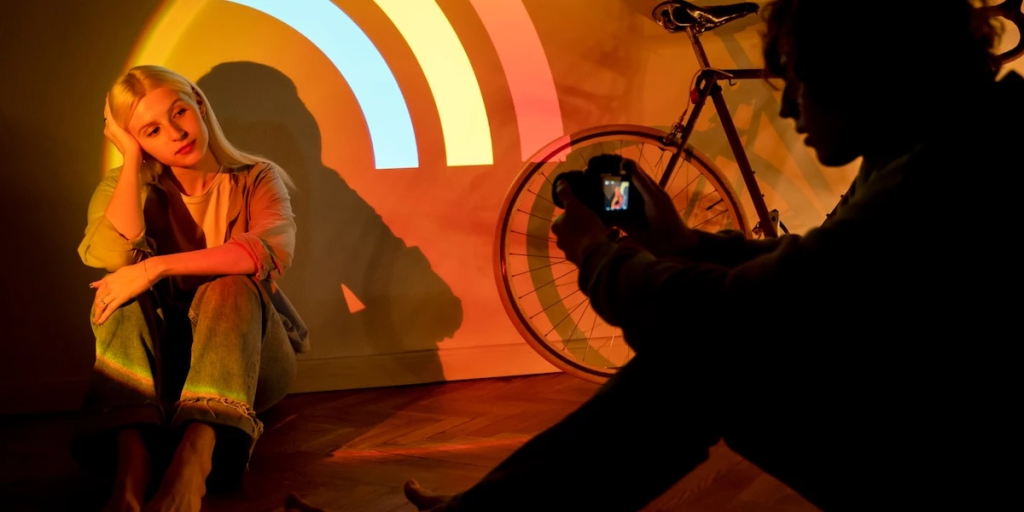
But there’s an important distinction: an EDC flashlight and a flashlight for photography are not the same thing:

An “everyday carry” model is all about maximum lumens, long-range illumination, and resistance to external factors;

A flashlight for photography is about light quality, beam characteristics, and the ability to easily adjust settings for specific tasks.

To help you avoid sudden drops in brightness and the appearance of streaks in your images, we’ll break down the factors that affect the atmosphere of night photography and explain what pitfalls to watch out for.

The Role of Lighting in Photography and Videography

Lighting in the frame provides predictability: you know where the viewer’s attention will focus, where secondary elements will fade into the background, and how the images will flow seamlessly during editing. Lighting guides the viewer’s attention, sculpts form, creates a gradation of shadows, and maintains continuity between takes.

Lighting for photography and video affects the following factors:

  • Exposure and noise level: how low the ISO will remain and how much detail will survive in the shadows.
  • Skin color and tone: the accuracy of white balance and the naturalness of skin tones.
  • Dynamic range: capturing highlights and shadows without lost detail.
  • Volume and form: working with key, fill, and rim lighting to create shape.
  • Scale and space: separation of planes, sense of depth and air.
  • Focal point: visual hierarchy—what catches the eye first and what recedes into the background.
  • Texture and surface: how metal, glass, fabric, wet asphalt, and other surfaces are rendered.
  • Mood and genre: from neo-noir to documentary restraint.

How to Choose a Light for Photographers and Videographers: What to Consider

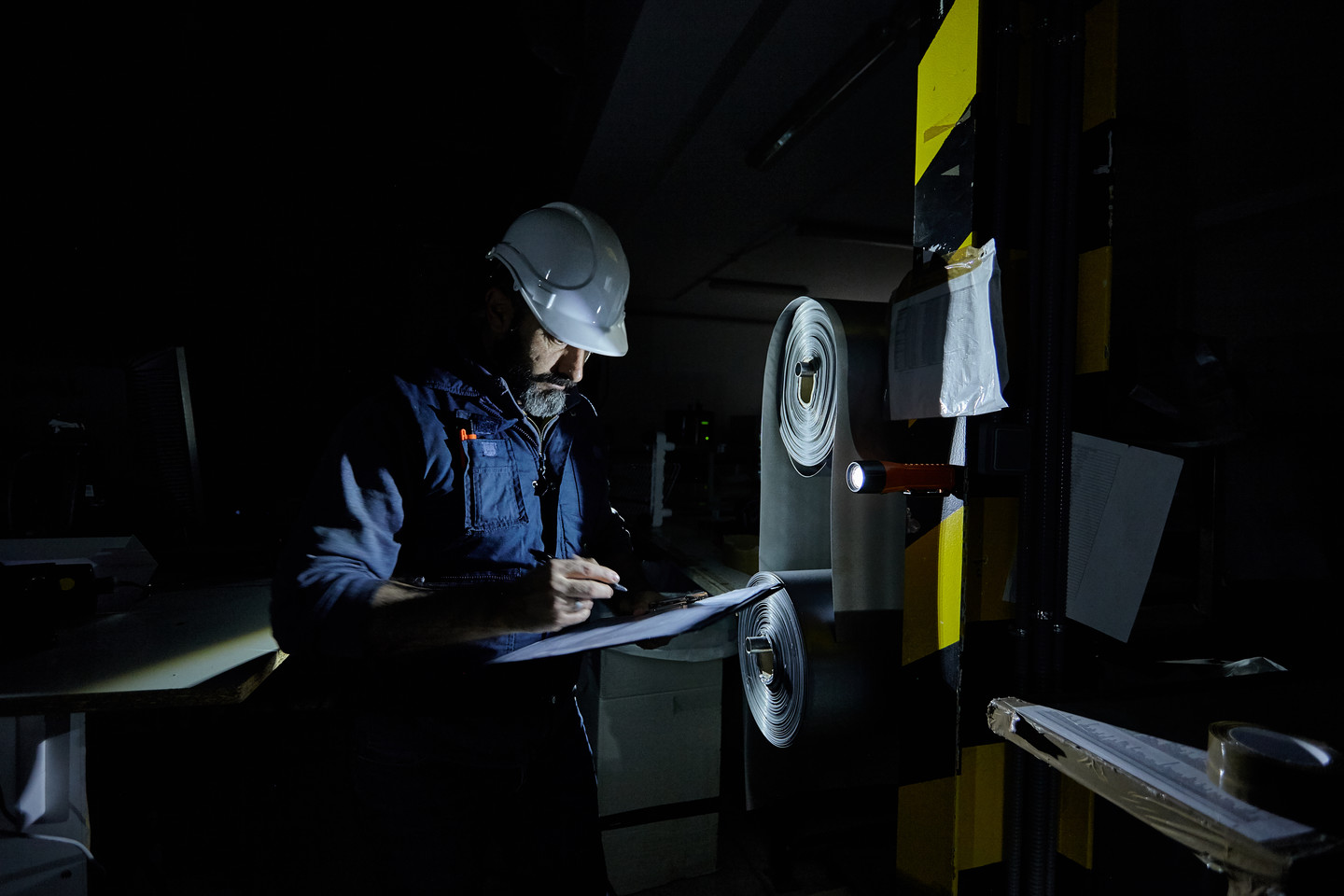
In the dark, a single flashlight can replace several light sources at once: a spot light, a flood light, and a work light. The key is to focus not on the number of lumens or beam distance, but on the quality of the beam and the flexibility of control.

You need stability, predictable color, intuitive modes, and the ability to quickly switch the beam from focused to soft.
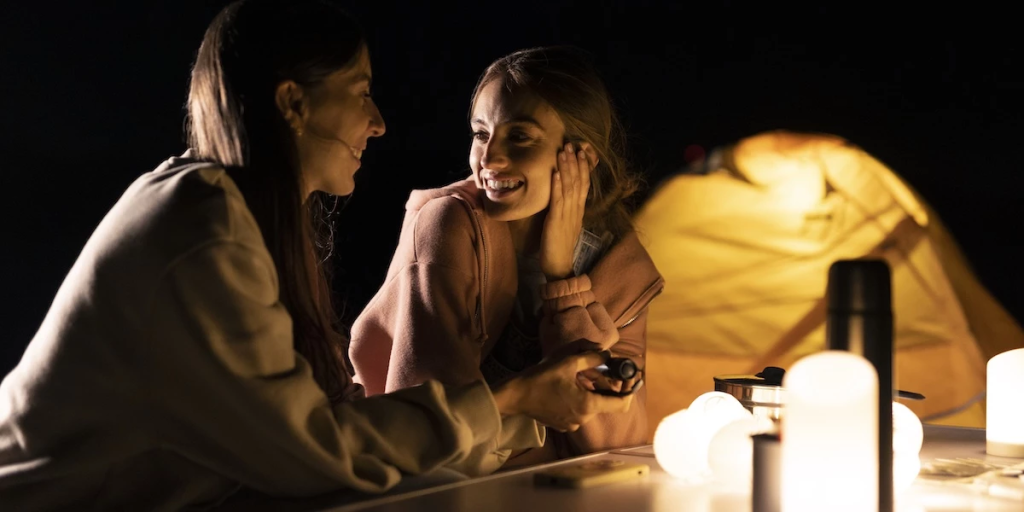
Below, we’ll break down the factors that photographers and videographers should consider first and foremost:

  • Color temperature of light. Whether a light is “warm” or “cool” is measured in kelvins (K). Warm light (up to 3500K) creates a cozy, “incandescent” feel; neutral light (4000–5000K) provides an accurate and natural image; and cool light (5600–6500K) adds a sense of nighttime air and glow. You can adjust the white balance in the camera as you see fit, but keep in mind that with drastic adjustments, skin tones and white objects can become distorted. Your goal is to use lighting for photography and video while accounting for the scene’s dominant hue, so you don’t have to correct colors in post-production. Stick to the basics: choose lights that allow you to switch between different color temperatures.
  • Color Rendering Index (CRI). This index indicates how accurately a light source renders colors compared to a standard. Light with a low CRI makes color correction difficult: when adjusting white balance, faces often look waxy. So, the higher the index, the better for you—skin will retain its natural tone, and surrounding objects will look “vibrant” in the frame. Quick home test: shine the light on some fruit or a color chart. If the red and flesh tones don’t change when you adjust the brightness, this flashlight is exactly what you need.
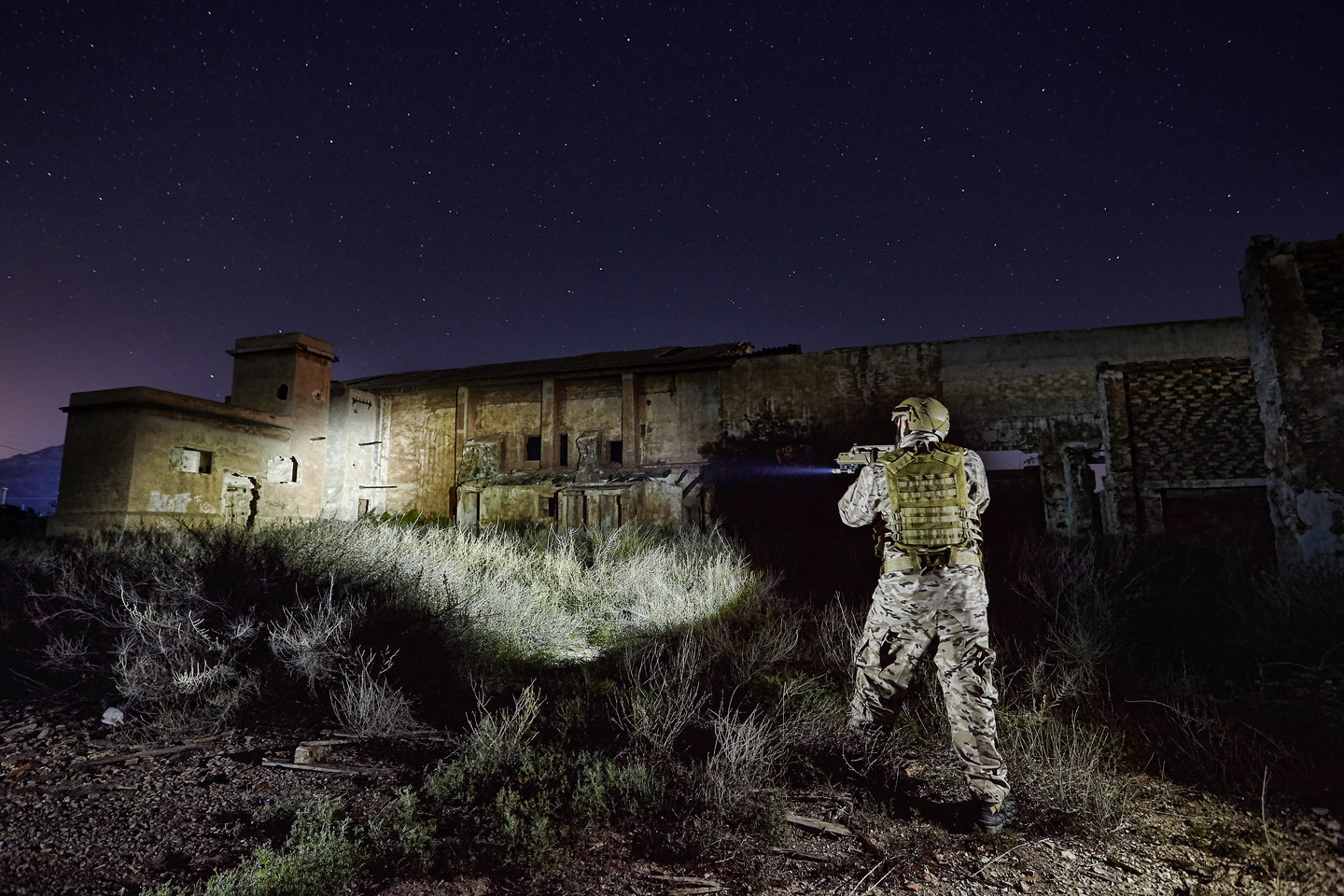
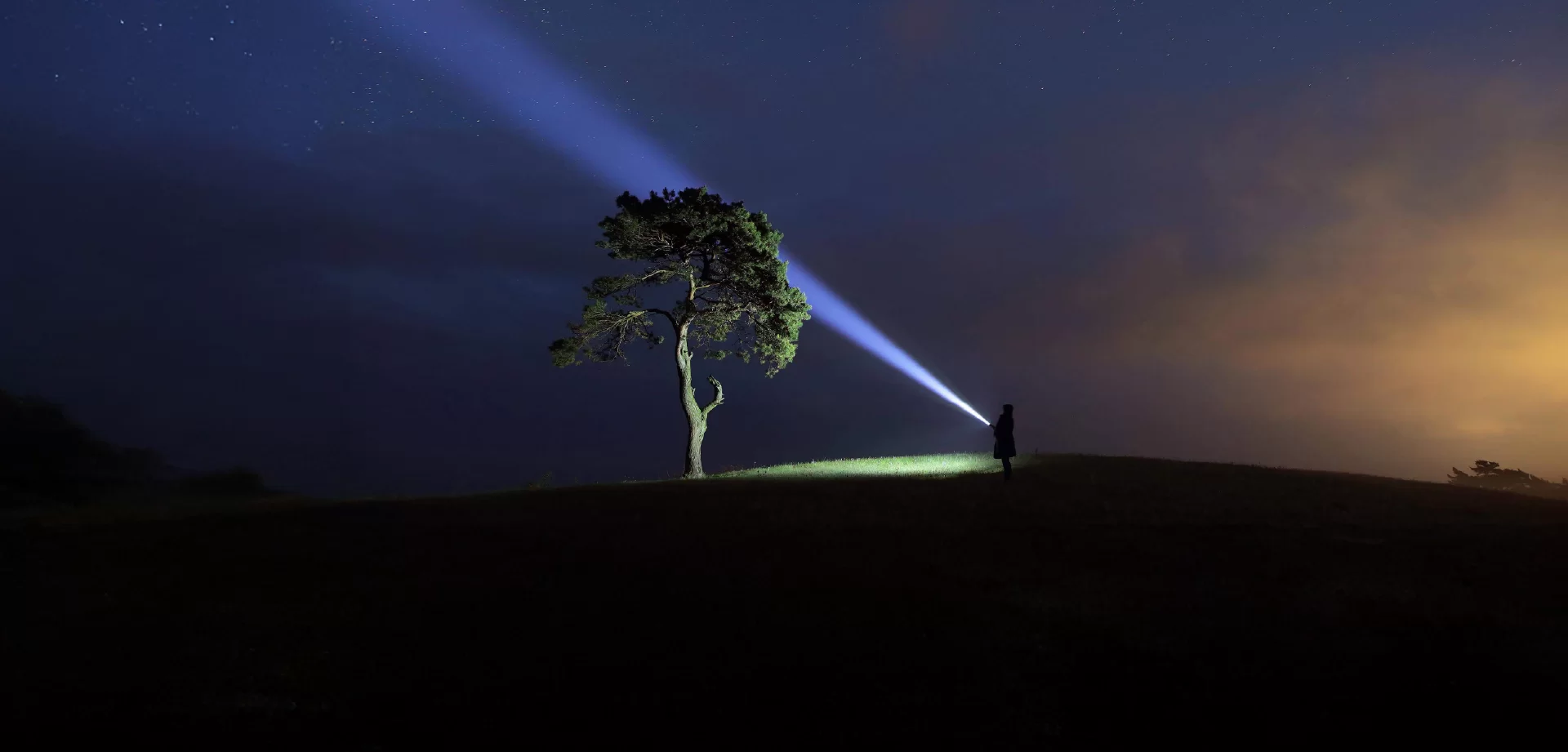
  • Beam type: focused and diffused. A narrow, concentrated beam highlights contours and illuminates distant areas, but can cause glare. The wide illumination provided by camping lanterns softens the image: faces look more pleasant, shadows don’t collapse, textures appear richer, but the intensity drops more rapidly with distance. For night portraits, it’s best to combine a spotlight from the side with soft lighting through a diffuser. On a long exposure, a directed beam acts like a brush: you can use it to outline edges and add volume to distant objects.
  • Battery life: rechargeable and disposable batteries. Rechargeable batteries have higher capacity and maintain brightness at a consistent level for longer, which is important for consistent exposure across multiple shots. Disposable batteries are easy to find in any store, but they lose efficiency quickly in cold weather and under heavy load. Look not only at the number of hours/minutes of runtime in each mode, but also at how the brightness drops: in simple flashlights, it can drop sharply, causing the final takes to be darker than the first ones. For video, it’s also important to have a driver without noticeable flickering; otherwise, streaks will appear at certain shutter speeds.

Attachments and diffusers help expand the flashlight’s capabilities, adding character to the light for video recording. A silicone cap widens the illuminated area and softens shadows. While this accessory may visually reduce the beam’s brightness, it improves image quality.
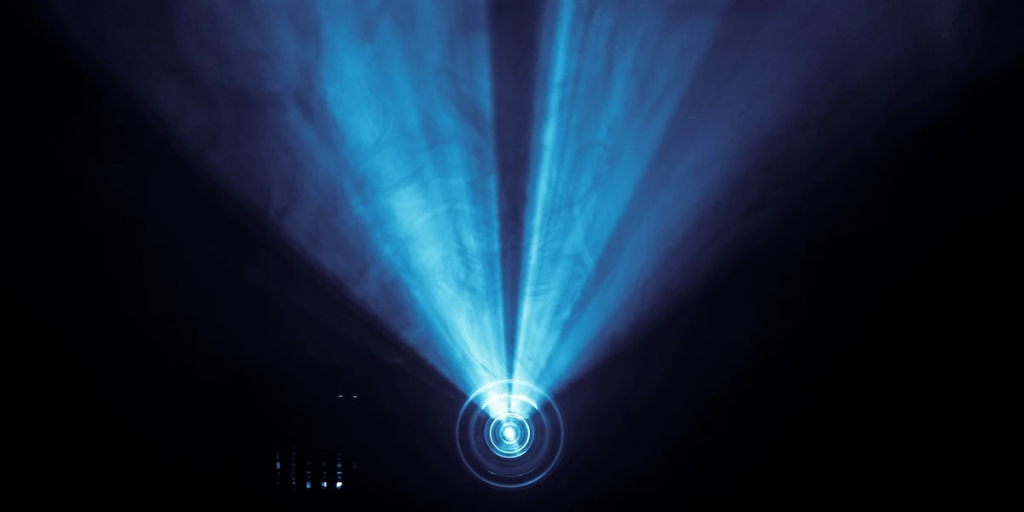
Color filters let you set the mood and separate scenes:

  • Red lights effectively highlight smoke and “warm up” skin tones. Red lights are also less glaring than white ones.
  • Blue lights create a cool, nighttime atmosphere. They work well on wet asphalt and metal.
  • Green lights help separate the background from the subject in the frame and compensate for excessive pink tones in the shot.

The logic is very simple: first, achieve the desired light shape (hard or soft, directional or flood), and then add color. This way, the shot will turn out cleaner and require less post-processing at the end.


Explore FENIX

Explore More